
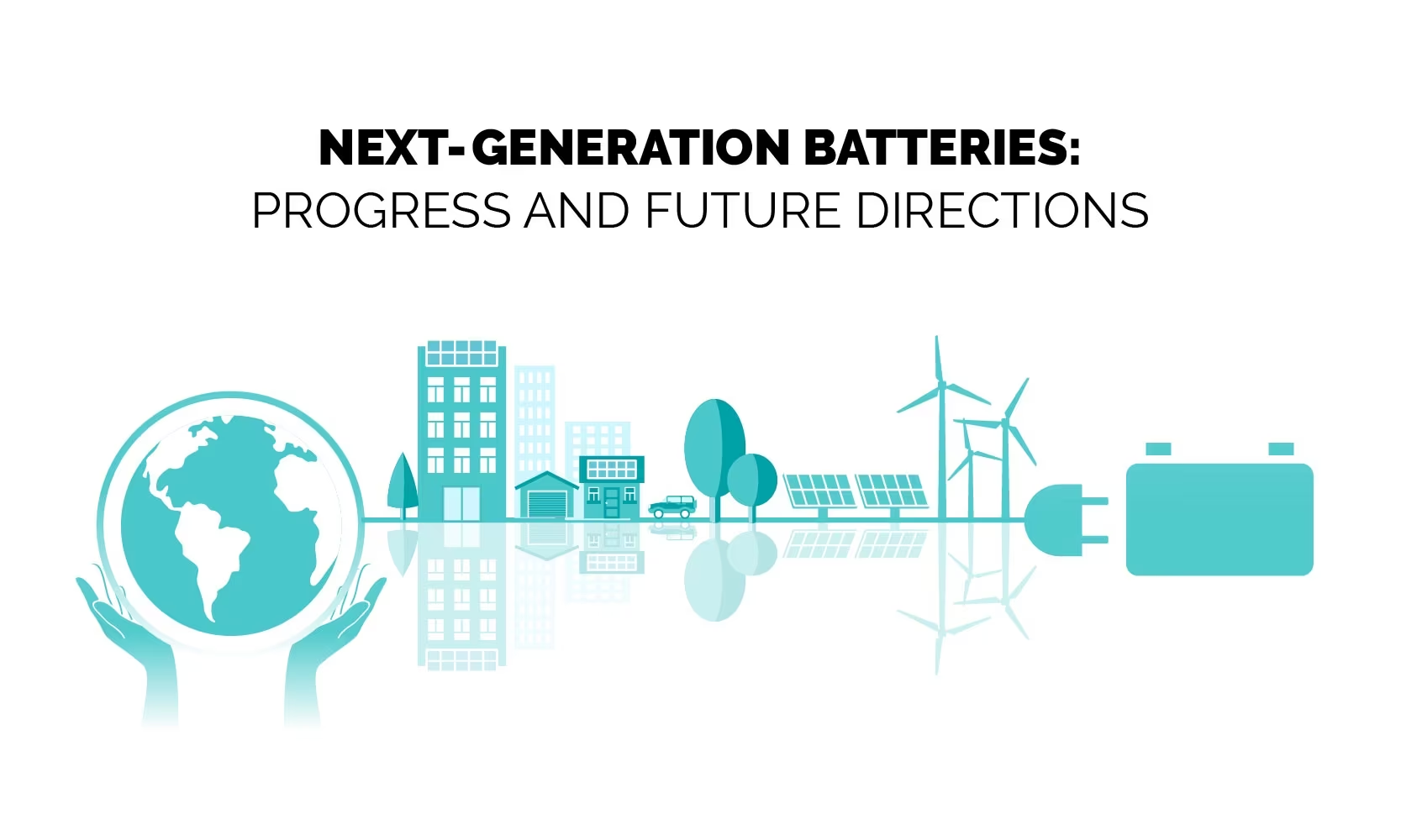
For decades, the relationship between homeowners and the electrical grid was a one-way street: power flowed in, bills went out. Today, a profound shift is underway, transforming passive consumers into proactive energy managers. At the heart of this revolution are next-generation home energy storage systems sophisticated, intelligent, and increasingly essential hubs for the modern household. These are not mere backup generators; they are integrated energy solutions that promise unprecedented control over electricity costs, enhance home resilience, and accelerate the transition to a sustainable energy future. This comprehensive guide delves into the intricate world of advanced residential batteries, exploring their core technologies, multifaceted benefits, critical selection criteria, and the transformative role they play within the broader smart grid ecosystem.
Unpacking the Core Technologies Behind Modern Home Batteries
To appreciate the capabilities of contemporary systems, one must understand the engineering marvels they represent. Moving beyond rudimentary lead-acid setups, today’s solutions are defined by high efficiency, deep intelligence, and remarkable longevity.
A. The Reigning Chemistry: Lithium-Ion Dominance
The vast majority of cutting-edge home storage systems leverage advanced lithium-ion chemistries, prized for their energy density and efficiency.
-
Lithium Iron Phosphate (LFP): Currently the leading choice for safety and lifespan. LFP batteries are exceptionally stable, boast a longer cycle life (often exceeding 6,000 cycles), and are less prone to thermal runaway, making them ideal for residential use. Their excellent depth of discharge (DoD) allows homeowners to safely use 90-100% of the battery’s capacity.
-
Nickel Manganese Cobalt (NMC): Known for a higher energy density in a smaller footprint, NMC batteries have been widely used. However, trends are shifting toward LFP due to its superior thermal and longevity characteristics.
-
Future Chemistries on the Horizon: Research is actively progressing into solid-state batteries, which promise even greater safety and energy density, and flow batteries, which could offer exceptional scalability and cycle life for very large home installations.
B. The Brain: The Inverter and Energy Management System (EMS)
The battery chemistry stores the power, but the inverter and EMS are the intelligent command center. This is where true “next-generation” capabilities are realized.
-
Hybrid Inverters: These advanced units integrate seamlessly with solar photovoltaic (PV) arrays, the grid, and the battery, managing the flow of energy bi-directionally. They can convert DC from solar panels to AC for home use, charge the battery with excess solar or grid power, and invert battery DC to home AC during an outage.
-
Sophisticated Software & Algorithms: The EMS uses predictive software, weather forecasting, and historical usage data to make autonomous, cost-optimizing decisions. It learns household patterns and can decide when to store solar energy, when to draw from the grid during off-peak rates, and when to dispatch power back to the grid if financially beneficial.
C. System Architecture: AC-Coupled vs. DC-Coupled
The method of system integration significantly impacts efficiency and retrofit potential.
-
DC-Coupled Systems: Here, solar panels and batteries are connected on the same DC circuit before a single inverter converts it to AC. This is typically more efficient for new solar-plus-storage installations, as energy avoids multiple conversion losses.
-
AC-Coupled Systems: The battery system has its own inverter and connects to the home’s AC electrical panel. This is the ideal solution for retrofitting batteries to an existing solar home, as it interfaces easily with the already-installed solar inverter.
The Multifaceted Benefits: Beyond Simple Backup Power
Investing in a next-gen home energy storage system yields a compelling array of financial, practical, and environmental returns that extend far beyond emergency lighting.
A. Financial Empowerment and Utility Bill Optimization
-
Peak Shaving (Demand Charge Management): For utilities that impose demand charges or have steep time-of-use (TOU) rates, batteries can discharge during expensive peak hours (e.g., 4 PM to 9 PM), virtually eliminating grid draw during these periods.
-
Solar Self-Consumption Maximization: Instead of exporting excess solar energy to the grid for a low feed-in tariff, homeowners can store it for use in the evening, dramatically increasing the utilization of their own clean energy often from 30-40% to 70% or more.
-
Arbitrage Opportunities: In regions with variable electricity pricing, the system can charge from the grid when rates are lowest (overnight) and power the home or export when rates are highest.

B. Enhanced Resilience and Uninterrupted Power Supply
-
Seamless Backup Power: During a grid outage, a properly installed system can automatically island the home and provide power within milliseconds, keeping critical loads—refrigerators, medical equipment, lighting, and internet—operational for hours or even days.
-
Grid Independence: For homes in remote areas or those prone to frequent and prolonged outages, a robust solar-plus-storage system can significantly reduce or eliminate reliance on an unreliable grid.
C. Environmental Impact and Supporting the Grid
-
Accelerating Renewable Adoption: By storing intermittent solar and wind energy, home batteries solve the “duck curve” problem, allowing for higher penetration of renewables on the local grid.
-
Participation in Virtual Power Plants (VPPs): Homeowners can opt to allow their utility or aggregator to leverage their collective battery capacity as a distributed grid resource. This can provide frequency regulation, defer costly grid upgrades, and generate additional revenue or credits for the participant.
-
Reduced Carbon Footprint: Maximizing self-consumption of solar energy directly displaces fossil-fuel-generated grid electricity, leading to a substantial decrease in the household’s carbon emissions.
Critical Selection Criteria: Choosing the Right System for Your Home
Selecting a home energy storage system is a significant decision. A careful evaluation of these key factors is essential for a satisfactory, long-term investment.
A. Capacity and Power: Understanding Your Energy Profile
-
Usable Capacity (kWh): This is the amount of energy the battery can deliver, dictating how long it can power your home. Analyze your daily and nightly energy consumption, especially your “critical load” needs during an outage, to determine the required capacity.
-
Continuous and Peak Power (kW): This rating indicates how much power the battery can deliver at once. A high peak power rating is crucial for starting large motors (like well pumps or air conditioners) without overloading the system.
B. Performance Metrics and Warranties
-
Round-Trip Efficiency: The percentage of energy put into the battery that you can later use. Top systems today offer 90-95% efficiency.
-
Depth of Discharge (DoD): The percentage of the battery’s total capacity that is recommended for use. A higher DoD (like 100% for LFP) means you get more usable energy from the same physical unit.
-
Cycle Life and Warranty: Manufacturers typically warranty the battery for a certain number of years and a guaranteed percentage of original capacity remaining (e.g., 10 years at 70% capacity). This is a key indicator of expected lifespan and value retention.
C. Integration and Smart Features
-
Solar and EV Charger Compatibility: Ensure the system is designed to work harmoniously with your existing or planned solar array and, increasingly, with electric vehicle chargers for holistic energy management.
-
Monitoring and Control App: A user-friendly, feature-rich mobile application is non-negotiable. It should provide real-time data on energy flows, savings, system health, and allow for customizable modes (e.g., “Backup Reserve,” “Cost Savings,” “Self-Powered”).
-
Scalability and Future-Proofing: Consider modular systems that allow you to add more battery capacity in the future as your needs or budget evolve.
The Broader Ecosystem: Home Storage and the Smart Grid of Tomorrow
Next-gen home batteries are not standalone devices; they are fundamental nodes in the emerging distributed energy grid.
A. The Rise of Virtual Power Plants (VPPs)
As mentioned, VPPs aggregate thousands of distributed home batteries to act as a single, dispatchable power plant. This provides grid operators with a flexible, clean resource to balance supply and demand, enhance stability, and avoid firing up polluting “peaker” plants. Participants often receive financial incentives, creating a new income stream from their asset.
B. Vehicle-to-Home (V2H) and Vehicle-to-Grid (V2G)
The future convergence of transportation and home energy is imminent. Electric vehicles with large batteries will soon be capable of bidirectional charging, allowing them to power a home during an outage (V2H) or supply energy back to the grid (V2G). This turns the EV into a mobile energy storage unit, further blurring the lines between assets.
C. Advanced Grid Services and Market Participation
In sophisticated markets, home storage systems can automatically participate in wholesale electricity markets or provide frequency regulation services, responding to grid signals in milliseconds. This transforms the home from a cost center into an active, revenue-generating participant in the energy economy.
Navigating Challenges and Making an Informed Decision
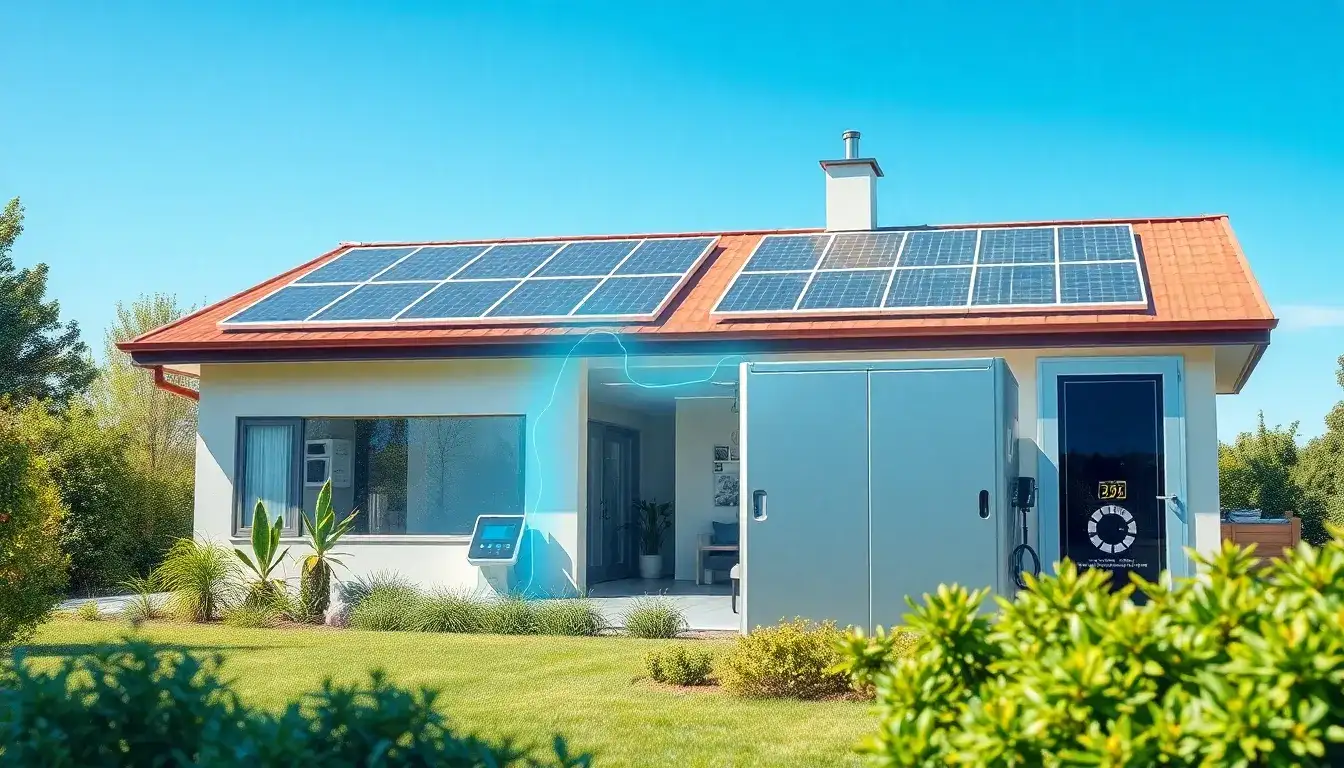
While the technology is mature, prospective buyers should be aware of challenges. The upfront capital cost remains significant, though falling prices and incentives are improving the payback period. Permitting and interconnection processes with local utilities can be complex and time-consuming, requiring professional installers. Lastly, the regulatory landscape for selling energy back to the grid or participating in VPPs varies dramatically by location and is constantly evolving.
Conclusion: The Empowered Home Energy Hub
Next-generation home energy storage systems represent a paradigm shift in how we conceive of residential power. They are the crucial linchpin that unlocks the full potential of rooftop solar, provides a bulwark against an uncertain climate and aging infrastructure, and places economic and energetic control firmly in the hands of the homeowner. As battery technology continues its rapid advance, costs decline, and grid integration deepens, the transition from a centralized, one-way grid to a distributed, resilient, and intelligent energy network becomes inevitable. For homeowners seeking financial savings, energy security, and a tangible role in building a sustainable future, investing in a next-gen home battery system is no longer a niche consideration it is a forward-thinking step toward mastering one’s own energy destiny. The home of the future is not just connected; it is self-aware, self-optimizing, and powerfully independent, all thanks to the intelligent heart of a modern energy storage system.