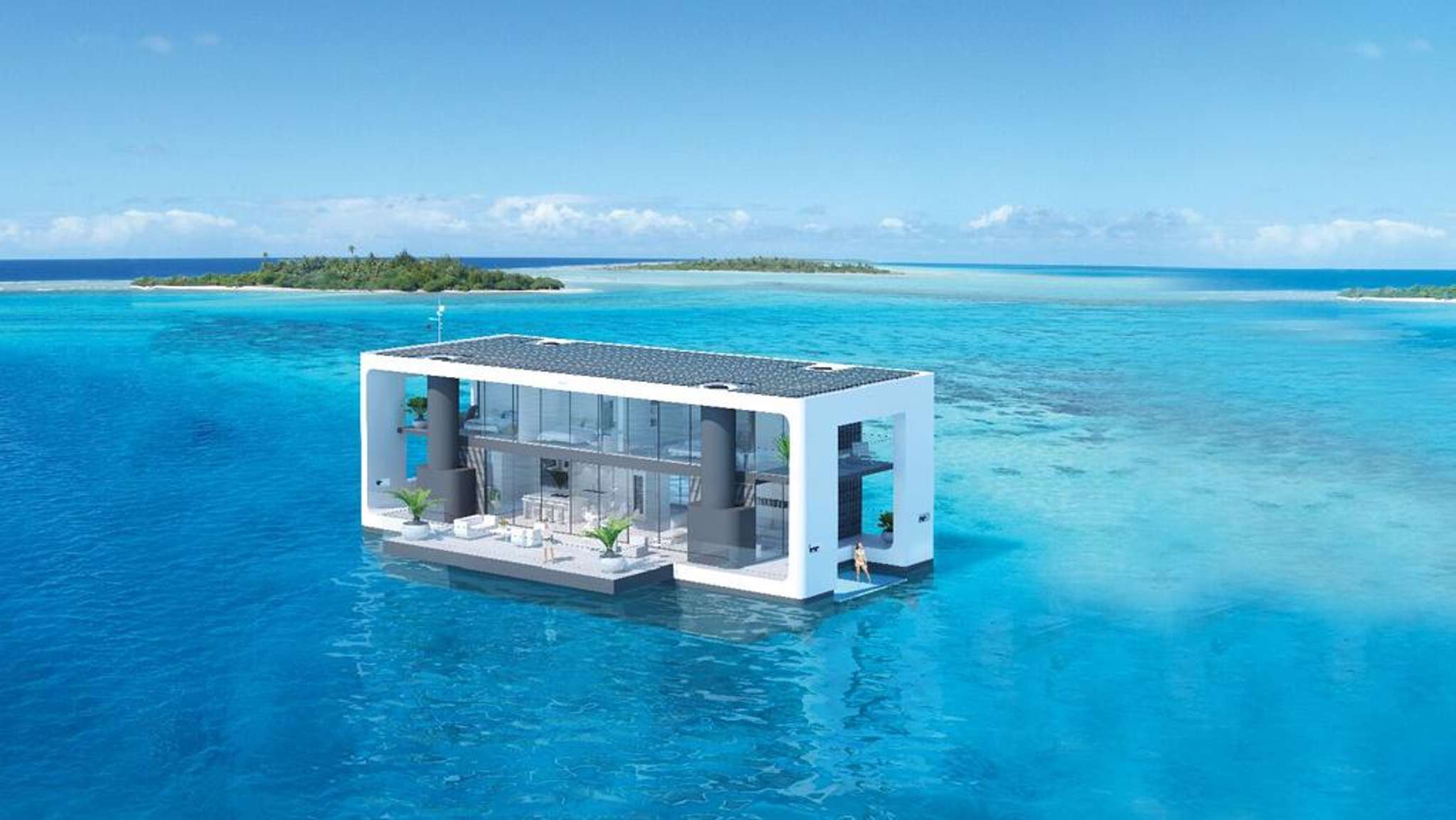
The relentless advance of climate change, manifested most visibly in the steady rise of global sea levels, presents one of the most profound challenges of the 21st century. Coastal cities and island nations worldwide face an existential threat, with projections suggesting hundreds of millions of people could be displaced by century’s end. In this landscape of uncertainty, a radical and innovative solution is moving from the fringes of architectural fantasy into the realm of practical necessity: floating home communities. These are not mere houseboats but engineered, permanent settlements designed to coexist with water, offering a blueprint for resilient, sustainable, and adaptive living. This comprehensive exploration delves into the multifaceted world of floating architecture, examining its engineering marvels, environmental synergies, socio-economic implications, and its potential to redefine humanity’s relationship with the aquatic frontier.
A. The Impetus: Understanding the Scale of Sea Level Rise
To appreciate the urgency driving floating community development, one must first grasp the stark reality of sea level rise. It is a direct consequence of global warming, propelled by two primary mechanisms: the thermal expansion of seawater as it warms and the accelerated melting of glaciers and ice sheets in Greenland and Antarctica. Current data from agencies like NASA and the IPCC indicate that the global mean sea level is rising at an accelerating rate, with estimates ranging from 0.3 to over 1 meter by 2100, depending on future greenhouse gas emissions. This encroachment leads to catastrophic coastal erosion, increased frequency and severity of “nuisance flooding,” saltwater intrusion into freshwater aquifers, and the outright submergence of low-lying areas. Traditional defensive measures like seawalls and levees are increasingly seen as costly, temporary, and ecologically damaging. In contrast, floating architecture proposes a paradigm shift: rather than fighting the water, it adapts to its movements, creating habitats that are inherently flood-proof.
B. Engineering and Architectural Innovation: Building on Water
The core of any floating community lies in its foundational technology. These are sophisticated structures, far removed from simple pontoons.
A. Buoyancy Foundations: The most common system utilizes reinforced concrete or expanded polystyrene foam encased in marine-grade concrete to create buoyant platforms. These hulls are designed to be watertight, durable against corrosion, and often compartmentalized to maintain stability even if breached.
B. Mooring Systems: A floating home must be secure yet flexible. Mooring systems are engineered to allow vertical movement with tides and waves while preventing horizontal drift. This often involves flexible piles driven deep into the seabed, or tensioned mooring lines attached to anchors, allowing the structure to rise and fall freely.
C. Materials and Construction: Sustainability dictates material choice. Recycled materials, sustainably sourced timber, and composites with low environmental impact are prioritized. Structures must withstand harsh marine environments UV radiation, salinity, and potential storm forces leading to innovations in protective coatings and resilient designs.
D. Utilities and Services: The lifelines of any community water, electricity, waste, and data require innovative solutions. This involves flexible, waterproof umbilicals for power and internet, closed-loop water systems with rainwater harvesting and on-site wastewater treatment (often using bioremediation), and decentralized renewable energy sources like solar panels and underwater turbines.
C. Environmental Synergy and Sustainability Metrics
True floating communities aspire to be net-positive environmental assets, not just neutral occupants of waterways.
A. Energy Independence: Integration of solar, wind, and hydrokinetic energy is paramount. Rooftop solar is standard, while community-scale microgrids manage distribution and storage, often aiming for complete energy autonomy.
B. Water and Waste Management: Advanced systems treat all black and grey water on-site, recycling it for non-potable uses or purifying it to drinking standards. Composting toilets and organic waste digesters turn waste into resources like biogas and fertilizer, embodying a circular economy model.
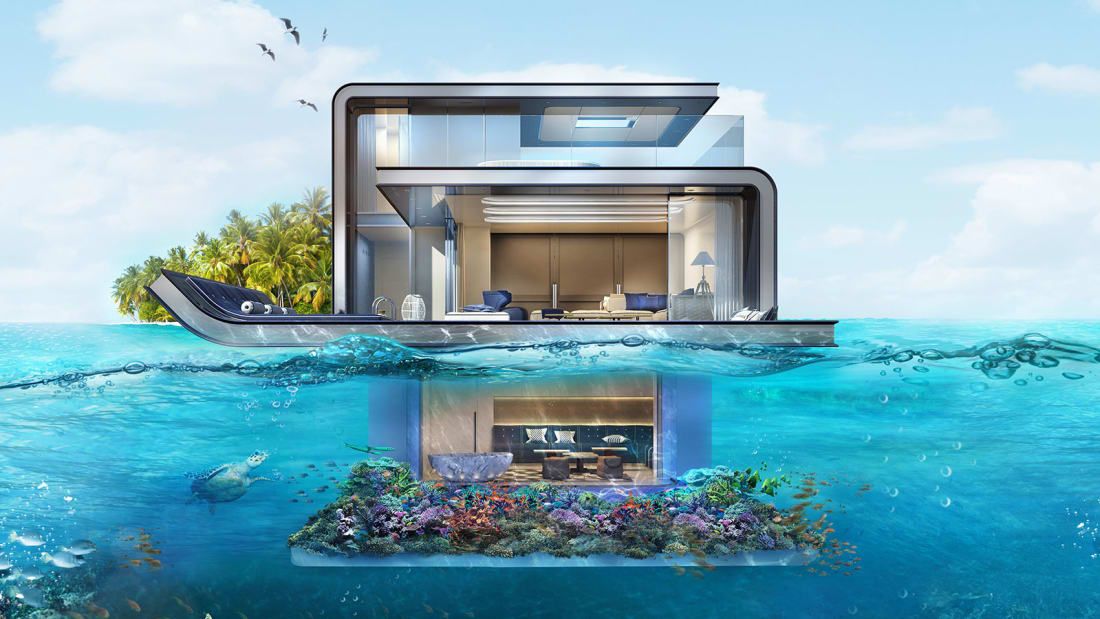
C. Ecological Enhancement: Design can actively support local ecosystems. Undersides of platforms can be textured to become artificial reefs, promoting marine biodiversity. Mangrove restoration or oyster bed cultivation can be integrated into the periphery, serving as natural water filters and wave attenuators.
D. Low Carbon Footprint: The entire lifecycle, from manufacturing to daily operation, is optimized for minimal carbon emissions. Locally sourced materials, passive heating/cooling design (utilizing water’s thermal mass), and a walkable community layout all contribute to a drastically lower carbon footprint compared to conventional urban developments.
D. Social and Community Dynamics: Crafting a New Society
Beyond physics and ecology, the success of floating communities hinges on their social architecture.
A. Governance and Ownership Models: These communities often pioneer novel governance structures, such as cooperatives or homeowner associations with strong shared sustainability covenants. Questions of ownership of the home versus the water plot lead to innovative leasehold or community trust models.
B. Community Cohesion and Design: Master planning emphasizes shared spaces community gardens, docks, recreational areas, and communal workshops that foster strong social bonds. The inherent connectedness and shared environmental goals can cultivate a powerful sense of collective purpose and mutual support.
C. Affordability and Equity: A significant challenge is preventing these communities from becoming exclusive enclaves for the wealthy. Addressing this requires policy intervention, subsidies for climate refugees, modular and cost-effective construction techniques, and the development of mixed-income models to ensure they serve as a equitable adaptation strategy.
D. Cultural and Psychological Adaptation: Living on water requires a shift in mindset. Community members develop a profound, daily connection to the natural environment and weather patterns. This can lead to heightened environmental consciousness but also necessitates resilience and adaptability as inherent community values.
E. Global Pioneers: Case Studies in Floating Development
Real-world projects demonstrate the viability and diversity of the concept.
A. Ijburg, Netherlands: A cornerstone of Dutch water management, this Amsterdam suburb features thousands of floating and amphibious homes. It stands as a testament to large-scale, municipally planned integration of floating architecture into an urban fabric.
B. Oceanix City (Concept): Proposed by BIG Architects and UN-Habitat, this visionary concept for 10,000-resident, self-sustaining floating cities is designed as a scalable model for coastal regions under threat. It incorporates all sustainability principles into a modular, hexagonal neighborhood template.
C. Makoko Floating School (and its Legacy), Nigeria: An iconic, locally-sourced triangular structure that brought global attention to adaptive living in informal waterfront communities. Though the original collapsed, its principles live on in ongoing efforts to develop dignified, flood-resilient housing for vulnerable populations in Lagos.
D. Floating Village on Tonlé Sap, Cambodia: An existing example of organic, traditional adaptation, where entire communities live on floating houses that migrate with the lake’s drastic seasonal changes, showcasing a deep, generational understanding of aquatic living.
F. Navigating the Headwinds: Challenges and Future Pathways
Despite promise, significant hurdles remain before widespread adoption.
A. Regulatory and Legal Frameworks: Most nations lack specific legal codes for permanent floating structures, creating gray areas in zoning, building codes, safety standards, and citizenship. Developing clear, adaptive regulatory frameworks is a critical prerequisite.
B. Economic Viability and Investment: High upfront costs for specialized engineering and infrastructure can be prohibitive. Scaling up production, developing new financing instruments, and quantifying long-term resilience benefits are needed to attract broader investment.
C. Storm Resilience and Safety: While inherently flood-proof, these communities must be engineered to withstand major storms, hurricanes, and tsunamis. This involves advanced mooring systems, breakwater integration, and possibly submersible designs that weather waves.
D. Social Acceptance and Cultural Shift: Moving from land to water represents a fundamental lifestyle change. Public perception must evolve from viewing these as novel curiosities to accepting them as legitimate, desirable, and safe permanent residences.
The trajectory is clear. As the planet’s hydrosphere continues its inexorable expansion, humanity’s settlement patterns must evolve in tandem. Floating home communities represent far more than a technical fix; they embody a holistic reimagining of urban life one that is dynamic, circular, and deeply integrated with natural systems. They offer a proactive, hopeful vision for climate adaptation, transforming a symbol of crisis rising water into a new foundation for community, innovation, and sustainable flourishing. The journey from terra firma to “aqua firma” is not without its complexities, but it may well be essential for securing a resilient future for coastal populations worldwide. The question is no longer if we will build on water, but how quickly we can learn to do it wisely, equitably, and in harmony with the blue heart of our planet.