
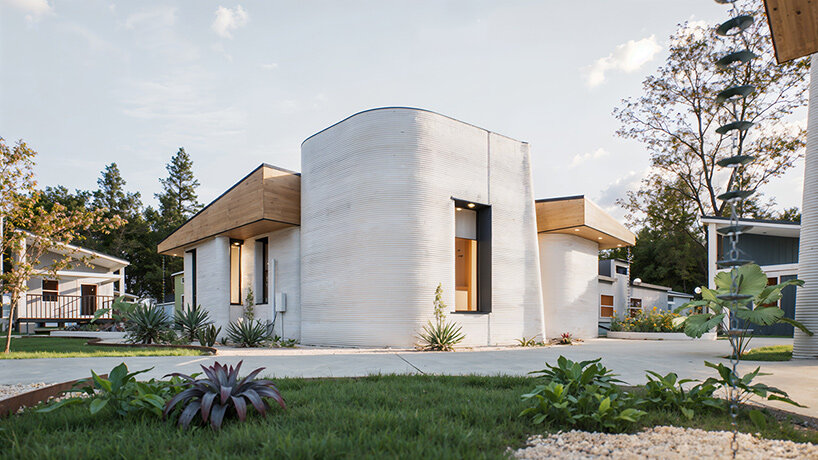
Imagine a future where entire neighborhoods rise from the ground not in a cacophony of heavy machinery and bustling crews over many months, but with the precise, quiet hum of a machine laying down layer upon layer of material, guided by a digital blueprint. This is not science fiction; it is the tangible reality of 3D-printed housing, a technological innovation poised to fundamentally disrupt the construction industry. As the global housing crisis deepens, with skyrocketing costs, labor shortages, and pressing environmental concerns, 3D printing emerges as a beacon of potential solutions. This article delves deep into the burgeoning world of 3D-printed neighborhoods, exploring the technology’s mechanics, its profound advantages, the challenges it must overcome, and its transformative potential to reshape how we conceive of affordable, sustainable, and resilient communities for the future.
A. Decoding the Technology: How Concrete Meets Code
At its core, 3D printing for construction, known as Contour Crafting or additive manufacturing, translates architectural digital models (CAD files) into physical structures.
A.1. The Printer Itself: Gantry Systems vs. Robotic Arms
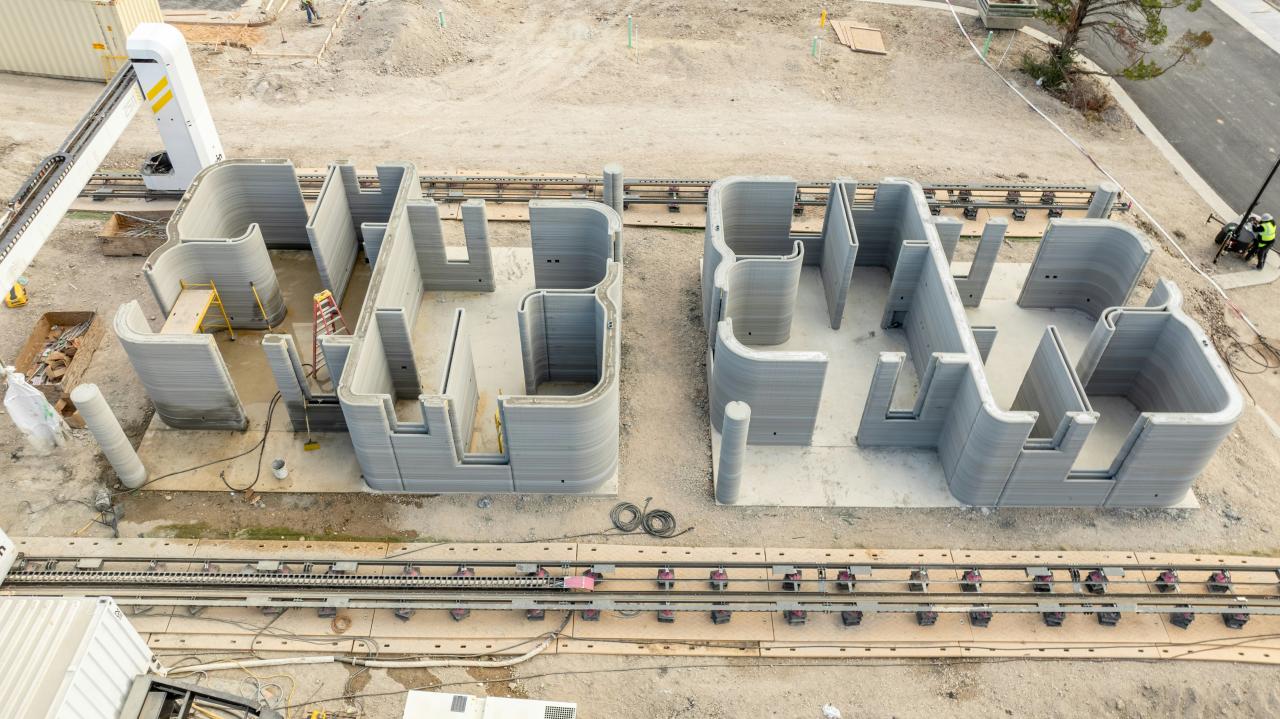
The most common setup involves a large, frame-like gantry system that moves a printing nozzle along three axes (X, Y, Z) over the construction site. This system is ideal for printing single-story or multi-story homes with a fixed footprint. Alternatively, robotic arm printers offer greater flexibility and can be mounted on tracks or vehicles, allowing for more complex, non-rectilinear designs and easier on-site maneuvering.
A.2. The “Ink”: Advanced Construction Materials
The printing material is not typical concrete. It is a specially formulated, fast-setting mortar or concrete mix often enhanced with fibers (like glass or polymer) for tensile strength, admixtures for perfect flow and rapid curing, and sometimes recycled materials like fly ash. The material must be precisely engineered to extrude smoothly, hold its shape immediately upon deposition (a property called green strength), and develop exceptional durability over time.
A.3. The Layering Process: From Foundation to Roof
The process begins with a prepared foundation. The printer’s nozzle then moves along its programmed path, extruding the material in continuous beads, layer by layer. Walls are printed as hollow structures with intricate internal patterns (like a honeycomb or wave) that provide immense strength, thermal insulation, and spaces for utilities. Openings for doors, windows, and conduits are created by pausing extrusion at predetermined points. Once the shell is complete, human crews install the roof, windows, doors, plumbing, and electrical systems—tasks that currently remain outside the scope of most printers.
B. Compelling Advantages: Why 3D Printing is a Game-Changer
The shift towards 3D-printed construction is driven by a powerful suite of benefits that address critical industry pain points.
B.1. Unprecedented Speed and Reduced Labor Costs
A home’s walls can be printed in a matter of 24 to 72 hours, a fraction of the time required for traditional framing. This dramatic speed reduces weather-related delays, financing costs, and, most significantly, on-site labor requirements by up to 50-80%. The technology automates the most strenuous tasks, mitigating the impact of skilled labor shortages and allowing a smaller crew to manage multiple projects.
B.2. Enhanced Design Freedom and Architectural Innovation
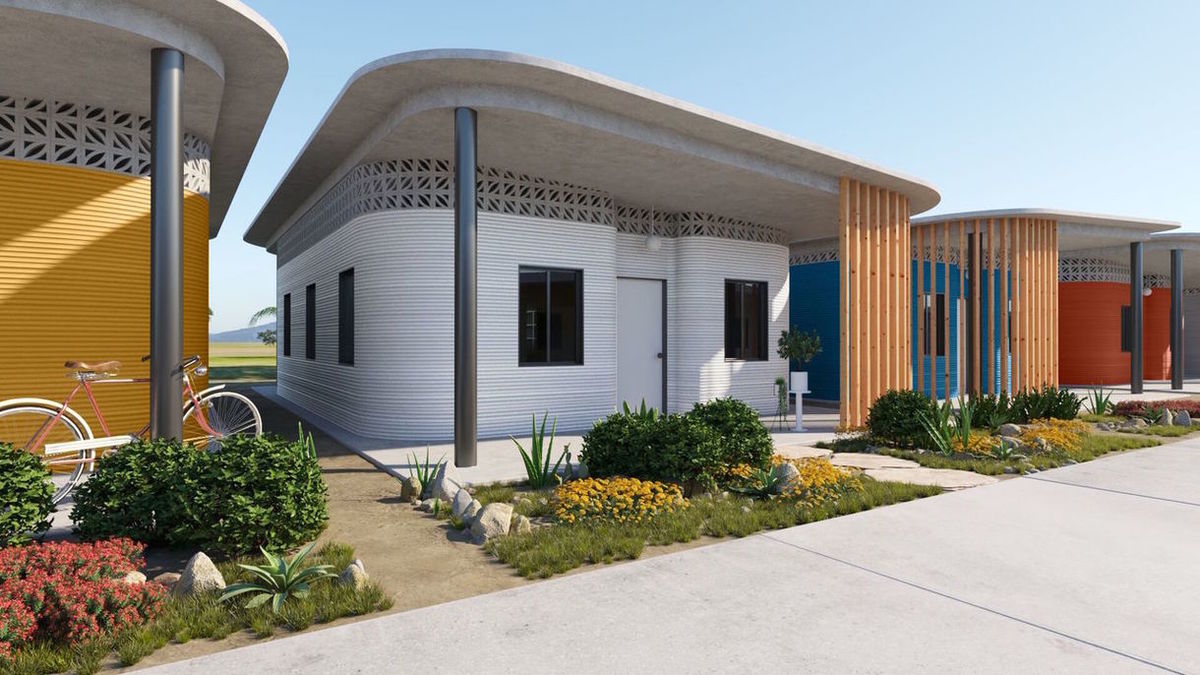
3D printing liberates architects from the constraints of standardized forms. It allows for the economical creation of curved walls, organic shapes, and highly customized facades that would be prohibitively expensive with conventional methods. This enables design optimization for climate, light, and aesthetics without a significant cost penalty, fostering unique community identities.
B.3. Superior Material Efficiency and Waste Reduction
Traditional construction is notoriously wasteful. 3D printing is an additive process, depositing material only where it is structurally needed. This precision can reduce raw material use by 30-60% and virtually eliminate cut-off waste from bricks, wood, and concrete, contributing to a cleaner job site and lower environmental footprint.
B.4. Improved Structural Strength and Disaster Resilience
The continuous, monolithic layering creates structures with exceptional load-bearing capacity and cohesion. The ability to engineer wall cavities and integrate reinforcing grids allows for homes that can be designed to better withstand hurricanes, earthquakes, and fires, offering safer shelters in disaster-prone regions.
B.5. A Powerful Tool for Affordable Housing
It is the convergence of speed, lower labor costs, and material efficiency that positions 3D printing as a potent tool for combating the affordable housing crisis. By significantly reducing the “hard costs” of construction, municipalities, non-profits, and developers can create quality homes at a price point accessible to low- and middle-income families, potentially at scale.
C. Real-World Pioneers: Case Studies of Printed Communities
This technology has moved beyond prototypes to actual inhabited communities.
C.1. The Icon & Lennar Collaboration: Wolf Ranch in Georgetown, Texas
A landmark project in the United States, this neighborhood of 100 homes is being built by construction tech firm ICON in partnership with homebuilding giant Lennar. Using Icon’s Vulcan printers, each home features unique curved walls and energy-efficient designs. This project is critical as it demonstrates the scalability and market acceptance of 3D printing by a major national builder.
C.2. Tabula Rasa: The European Vision in Eindhoven, Netherlands
Project “Milestone” in Eindhoven is Europe’s first commercial housing project based on 3D concrete printing. The five planned homes are designed to resemble large, nestled boulders, blending into a natural landscape. This project emphasizes biophilic design and sustainability, pushing the boundaries of what a printed home can look like.
C.3. New Story and ICON: A Humanitarian Model in Nacajuca, Mexico
Perhaps the most socially impactful example is the community in Mexico built for impoverished families. Non-profit New Story and ICON printed 500-square-foot homes locally, demonstrating the technology’s viability for rapid, low-cost humanitarian shelter in challenging environments, offering dignity and safety.
D. Navigating the Hurdles: Challenges and Considerations
Despite its promise, the path to widespread adoption is not without obstacles.
D.1. Regulatory and Code Approval Hurdles
Building codes and inspection processes worldwide are based on centuries of conventional methods. Gaining approvals for 3D-printed structures requires extensive testing, certification, and education of regulatory bodies to prove long-term durability, safety, and performance. This process is ongoing and varies by jurisdiction.
D.2. Limitations in Material Science and Integration
Current printable materials are primarily cement-based, which has a high carbon footprint. Research into geopolymer, clay-based, and recycled material “inks” is vital for true sustainability. Furthermore, the full integration of plumbing, electrical, and HVAC systems into the printing process remains a complex challenge being tackled through hybrid approaches.
D.3. High Initial Capital Investment and Skilled Operator Needs
Acquiring or leasing large-scale 3D printers and setting up the digital and material supply chain requires significant upfront capital. Furthermore, operating these machines demands a new breed of skilled technicians a blend of traditional construction knowledge and digital fluency which necessitates new training programs and career pathways.
D.4. Aesthetic Perceptions and Market Acceptance
The current “ribbed” or layered aesthetic of raw printed concrete may not appeal to all buyers. While it can be stuccoed or clad, the unique texture is a signature. Overcoming the “novelty” factor and convincing the broader market of the long-term value, comfort, and normalcy of 3D-printed homes is an ongoing marketing and educational effort.
E. The Future Horizon: Smart, Sustainable, and Self-Sufficient Communities
Looking ahead, 3D printing will likely converge with other technological trends to create holistic community solutions.
E.1. Integration with Renewable Energy and Smart Home Tech
Printed homes can be designed with integrated conduits and niches for solar panel wiring, battery storage, and smart home sensors from the outset. Their thermal mass can be optimized for passive heating and cooling, creating ultra-efficient, net-zero energy dwellings that reduce lifetime ownership costs.
E.2. On-Site Resource Utilization and Circular Economy
Future innovations may involve printers that use locally sourced, natural, or recycled materials such as soil, rice husk ash, or construction debris tailoring the build to the local environment and drastically cutting transport emissions. This fosters a circular economy model in construction.
E.3. Multi-Story and Mixed-Use Developments
The technology is rapidly advancing beyond single-family homes. Companies are developing systems to print multi-story apartment buildings, commercial spaces, and even vertical infrastructure. This scalability is key to creating dense, walkable, and fully printed urban neighborhoods.
E.4. Disaster Response and Extraterrestrial Construction
The speed and portability of 3D printers make them ideal for post-disaster recovery, quickly erecting emergency shelters or permanent housing. Looking even further, agencies like NASA are actively researching 3D printing using lunar or Martian regolith to build habitats, making this technology a cornerstone for future off-world colonization.
Conclusion: Building a Better Foundation for Society
3D-printed neighborhoods represent far more than a novel construction method; they symbolize a paradigm shift towards a more efficient, equitable, and environmentally conscious built environment. While technical, regulatory, and perceptual challenges persist, the trajectory is clear. As the technology matures, costs decrease, and stunning, resilient communities like Wolf Ranch and those in Eindhoven provide living proof, 3D printing is set to move from the fringe to the mainstream. It offers a powerful answer to some of society’s most pressing questions: How do we house our growing population affordably? How do we build with less waste and more resilience? The answer, it seems, may increasingly be printed, layer by deliberate layer, into the very fabric of our future communities. The revolution is not just in how we build, but in what we build a foundation for a better quality of life, accessible to more people than ever before.